Iranian salt for export

Types of Irani Salt for Export

Are you looking to import high-quality salt from Iran at a reasonable price?

HAVA Foods” proudly offers the best and highest quality Iranian salts to international markets.

If you are looking to import salt to your country, count on HAVA Foods unparalleled advice and services to supply the salt you need.

Why “HAVA Foods”?


-Premium Quality: At “HAVA Foods”, we carefully select our salts from the finest mines, salt lakes, desert salt flats, and processing plants across Iran.

-Unparalleled Variety: At “HAVA Foods” you can find all kinds of Iranian salt, including edible salt, industrial salt, livestock salt, road salt, decorative rock salt, blue salt, and pink salt, at the high quality and most reasonable prices.

-Competitive price: At “HAVA Foods”, we can offer you Irani salts at a competitive and fair price due to the elimination of intermediaries and direct contact with manufacturers.

-Customer Satisfaction Guarantee: Your satisfaction is our priority at “HAVA Foods”. That is why our profit margins are as low as possible. Our profit lies in customer satisfaction and long-term business partnerships.

-No restrictions on supply: HAVA Foods”  can supply all types of salt in high quantities.

Contact “HAVA Foods” now and take advantage of our good advice and services. In the rest of this article, you will learn more about the types of Irani salt:

Introduction:

Iran has a long tradition of salt extraction that dates back to ancient times. Today, thanks to its rich natural resources and strategic location, the country is among the major salt exporters in the world. The Garmsar salt mine, one of Iran’s largest, is notable not only nationally but also internationally, as its scale and reserves are comparable to well-known salt mines like Goderich in Canada and Wieliczka in Poland.

Iranian salt is exported to various countries in both granular and rock salt forms.

There are different types of salts in Iran.
This mineral can be exported to different countries in both edible and industrial forms.

Russia, Turkey, India, Iraq, Armenia, European countries, and GCC countries can be among the export destinations for various types of Iranian salt.

What Is Salt?

A Vital Chemical Compound That’s Irreplaceable for the Body and Everyday Life

When we hear the word salt, the first thing that usually comes to mind is its familiar salty taste that brings flavor to our food. But halite is much more than just a seasoning.

From a chemistry point of view, salt is an ionic compound that forms through the reaction of an acid and a base. It’s made up of both positive and negative ions.

In nature, salt often appears as white crystals, but depending on impurities and formation conditions, it can be found in a wide range of colors.

From regulating water and electrolyte balance to keeping nerves and muscles working properly — we depend on halite for more than we realize. Salt has a quiet but essential presence: in every kitchen, in every cell of our body, and in almost every corner of nature.


Why Does Our Body Need Salt?

1. Regulating water and electrolyte balance:

Sodium, the main element in salt, acts like a gatekeeper for cells. It controls how much water enters or leaves the cells.

2. Supporting nerve and muscle function:

Sodium and potassium ions are key to the nervous system. They help trigger muscle contractions — including the heart.

3. Maintaining blood pressure and heart function:

Too little salt in the body can lead to dangerously low blood pressure.

4. Helping with digestion and nutrient absorption:

Hydrochloric acid in the stomach, which is crucial for digesting food, is made using chloride ions. Without enough salt, we don’t get enough chloride, which means weaker digestion, loss of appetite, and a lack of nutrients.

5. Keeping the body’s pH level in balance:

Sodium and chloride ions help neutralize acids in the body (like lactic acid during intense activity) and keep the pH of our blood and body stable.

6. Providing essential trace minerals:

Natural halite contains important elements like calcium, iron, and magnesium. These are vital for strong bones, healthy red blood cells, and a well-functioning nervous system.

7. Boosting flavor and preserving food:

No spice enhances food quite like salt. Beyond flavor, its antimicrobial properties have made halite a natural preservative used throughout history.

Below, we mention some of the most important types of salt exported by Iran and their customers:
Edible Salt
Edible Salt

6 Types of salt exported from Iran:

  • Industrial salt: This type of salt, which is exported in bulk or packaged form, is used in various industries such as petrochemicals, textiles, tanning, paint manufacturing industry
    and detergent production.
  • Edible salt: Refined and iodized edible salt is another of Iran’s export items that is exported to various countries.
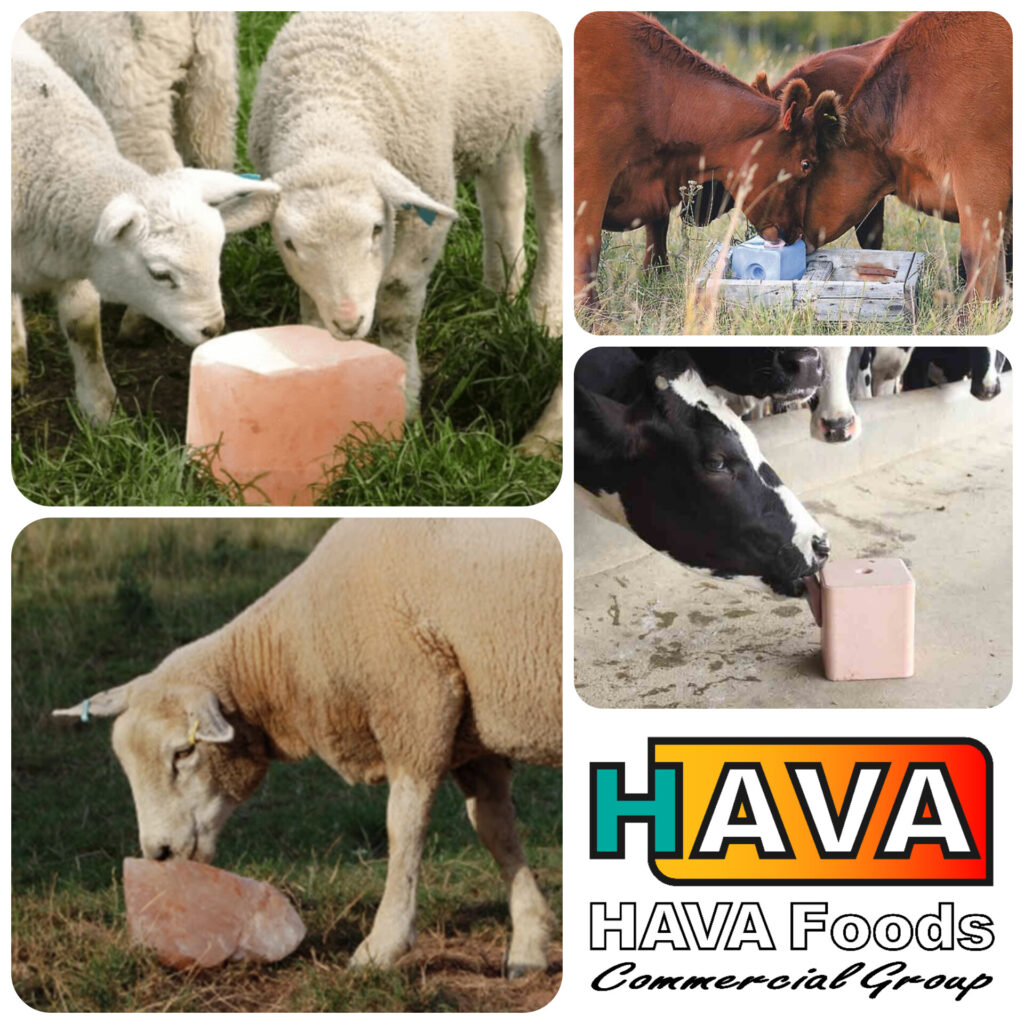
  • Livestock salt: This type of salt, which is supplied in the form of rock salt or processed powdered salt, is used to feed livestock and poultry.
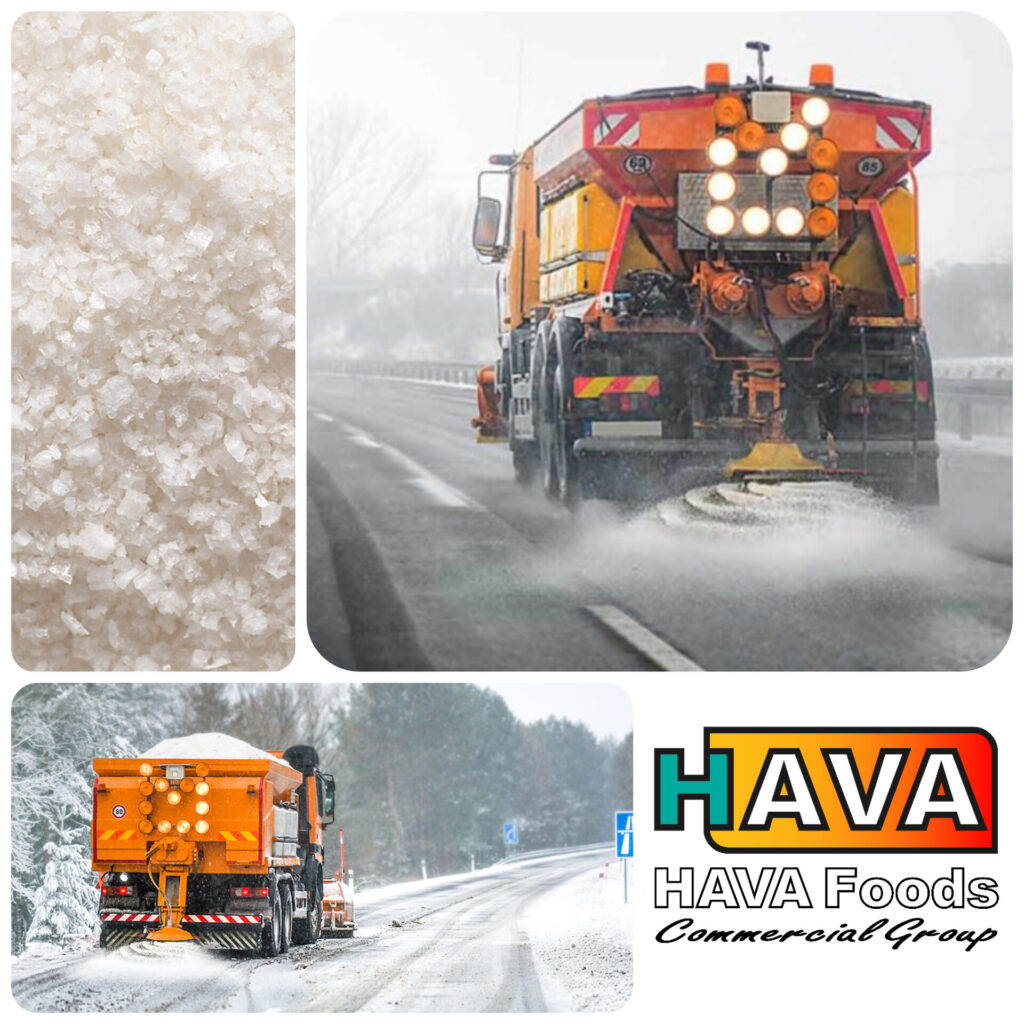
  • Road salt: Road salt is used to de-ice roads in the winter and is exported to countries that have cold and snowy winters.
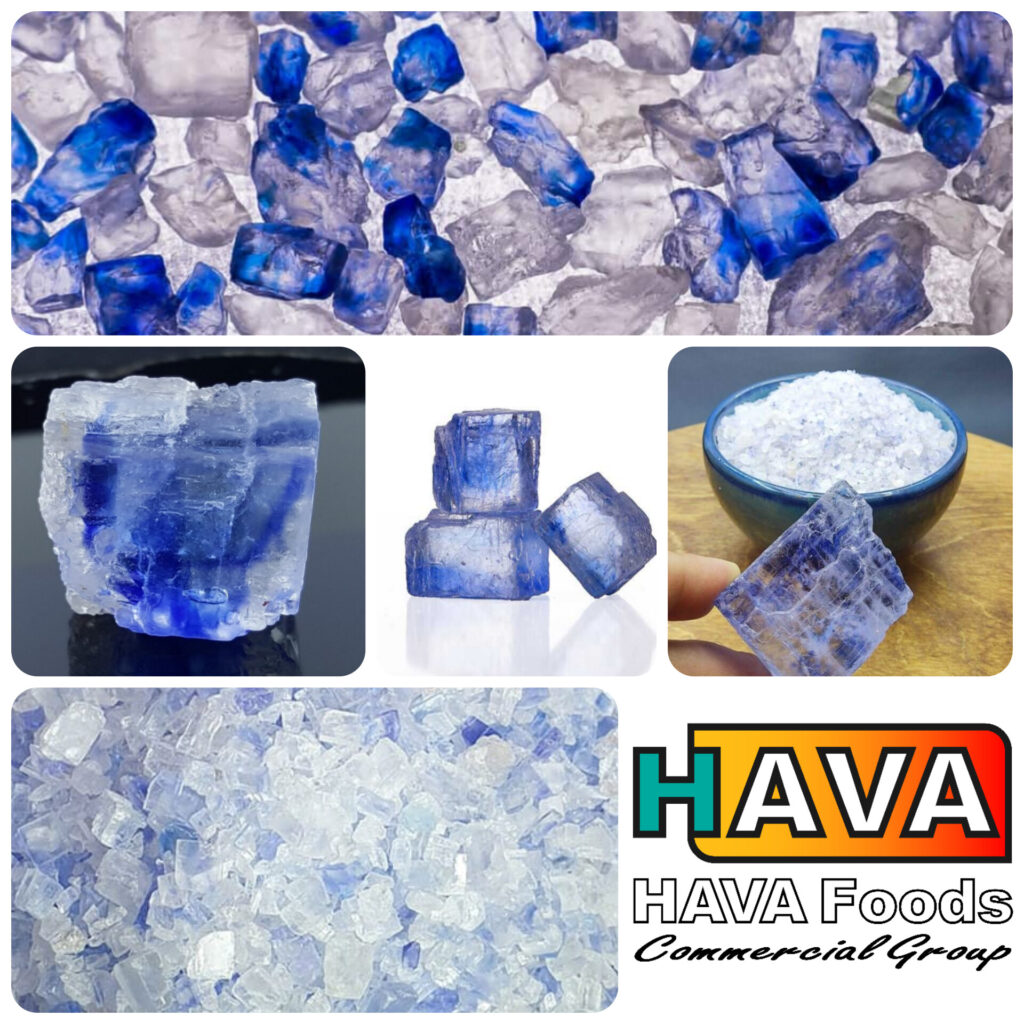
  • Colored salts (blue salt and pink salt): These types of salts come in different colors such as pink, red, orange, and blue, and are shipped in granular or rock salt forms for export purposes.
  • Decorative rock salt: Iran has rock salt mines with various colors and designs that are used to produce decorative products. These products are exported to different countries.

Customers of Iranian salt:

Iranian salt customers can be divided into two general categories:


Iran’s neighboring countries: Iraq, Turkey, Afghanistan, Pakistan, and the Persian Gulf countries are among the most important customers of Iranian salt. Geographical proximity and strong trade relations have made these countries the main markets for Iranian salt.


Other countries: In addition to neighboring countries, Iran also exports salt to countries in Asia, Europe, and Africa. These destinations include China, India, Russia, and some European countries.

Rock Salt
Rock Salt
Below, we more describe in detail the types of Iranian exported salt:

Industrial salt:

Industrial salt, also called “non-edible” salt or “industrial salt”, is a very important raw material in various industries and has a wide range of applications.

Unlike table salt, which must be pure and refined, industrial salt can contain impurities, although the amount of these impurities is controlled depending on its use.

The purity of industrial salt is 95% or lower.

Main uses of industrial salt:

.Chemical industries:

-Production of chlorine and caustic soda:

 Industrial salt is the main raw material in the electrolysis process for producing chlorine and caustic soda(Sodium Hydroxide). These two chemicals are used in the production of detergents, plastics, paper, and many other products.

-Production of sodium carbonate (Soda Ash):

Sodium carbonate is used in the production of glass, detergents, and textile industries.

-Hydrochloric Acid Production:

This acid is used in various industries, including the production of chemicals, cleaners, and metal processing.


.Oil and gas industry:

– Oil and gas well drilling:

Industrial salt is used as an additive to increase the density of drilling fluid. This helps control well pressure and prevent well wall collapse.

-Soil stabilization:

In some construction and oil projects, industrial salt is used to stabilize soil and prevent land subsidence.

.Textile industry:

-Fabric dyeing: Industrial salt is used as a color fixative in the fabric dyeing process.

-Regeneration of water hardness-reducing resins:

In textile factories that use hard water, industrial salt is used to regenerate water hardness reducing resins.

.Leather tannery:

Industrial salt is used in the leather tanning process to retain moisture and prevent leather from spoiling.

.Production of detergents:

Industrial salt is used as a filler and viscosity-regulating agent in the production of detergents such as laundry detergent and dishwashing liquid.

.Metal industries:

In some metallurgical and metal production processes, industrial salt is used as an auxiliary and separating agent.

.Road de-icing:

Although road salt is defined in a separate category, it is essentially a type of industrial salt used to prevent roads and walkways from freezing in the winter.

Features of industrial salt:

.Purity: The purity of industrial salt varies depending on its application. In some industries, high purity is essential, while in others, minor impurities are not a problem.

.Particle size: The particle size of salt can also vary depending on its application. For example, salt used in oil well drilling is usually in powder form, while salt used in road de-icing may be in a coarser granular form.

.Humidity: The moisture content of industrial salt must also be controlled, as high humidity can cause it to clump and reduce its quality.

Important points in exporting industrial salt:

.Determining technical specifications: Before exporting industrial salt, its precise technical specifications (such as purity, particle size, moisture, and type of impurities) must be determined based on customer needs.

.Proper packaging: Industrial salt packaging should be in a way that protects it from moisture and contamination and makes it easy to transport.

.Obtaining the necessary certificates: To export industrial salt to some countries, it may be necessary to obtain specific certificates.

Salt Packaging Bulk or Retail

Edible salt / Table salt:

Edible salt, or table salt, is a type of salt that is suitable for human consumption and must be of high purity. In Iran, edible salt is usually extracted from salt mines and, after undergoing purification and processing, is packaged and supplied for household use and the food industry.

Features of table salt:

.High purity: Edible salt must be of high purity and free from any harmful contamination or impurities. National and international standards determine the permissible level of impurities in edible salt. Salt with a purity percentage of over 95 is considered edible salt.

.Iodine content: In many countries, including Iran, it is mandatory to add iodine to table salt. Iodine is an essential mineral for the proper functioning of the thyroid gland, and its deficiency can lead to serious health problems.

.Proper particle size: The particle size of table salt should be such that it dissolves easily in food and provides a desirable taste. Table salt is usually supplied in fine or medium grain size.

.Low humidity: The humidity of edible salt should be low to prevent it from clumping and reducing its quality.

.Hygienic packaging: Edible salt must be supplied in hygienic and appropriate packaging to prevent contamination.

Types of table salt:

.Refined salt: This type of salt is the most common type of table salt produced and sold in Iran. Refined salt loses its impurities through various processes and reaches a high purity.

.Sea salt: Sea salt is obtained by evaporating seawater and contains small amounts of other minerals, such as magnesium, calcium, and potassium. Some people believe that sea salt tastes better than refined salt, but it is not much different in terms of nutritional value.

.Kosher Salt: This type of salt has coarser grains than regular salt and is usually used to flavor meat.

.Flavored salt: Flavored salt is a type of salt that is mixed with various spices and vegetables and is used to flavor foods.

Uses of table salt:

.Home Uses: Table salt is used as a flavoring and main spice in home cooking.


.Food industries: Table salt is used as a preservative and flavoring in various food industries, including the production of canned goods, pickles, sauces, and meat products.


.Bakery: Table salt is used in bakeries to control fermentation and improve the flavor of bread.

Export of table salt:

Iran is one of the exporters of table salt to various countries. The high quality of Iranian salt and its competitive price have made this product gain attention in global markets.

Important points in exporting edible salt:

.Compliance with health standards: Exported edible salt must comply with the health standards of the destination countries.


.Proper packaging: The packaging of edible salt should be such that it protects it from moisture and contamination and provides the necessary information in the language of the destination country.


.Obtaining the necessary certificates: Specific certificates may be necessary to export table salt to some countries.

Livestock salt:

Livestock salt, also called “livestock salt” or “block salt,” is a type of salt specifically formulated to meet the nutritional needs of livestock and poultry. Livestock salt contains essential minerals that are essential for the health, growth, and reproduction of animals.

Livestock Salt
Livestock Salt
Types of livestock salt:

.Rock salt: Rock salt is extracted from salt mines in large, hard pieces and is directly fed to livestock. By licking rock salt, livestock meet their need for salt and minerals.


.Block Salt: Block salt is a type of compressed salt that is produced in the form of cubic or cylindrical blocks. Block salt usually also contains other minerals such as calcium, phosphorus, magnesium, and zinc.


.Powdered salt: Powdered salt is produced in a fine powder form and can be added to animal feed. Powdered salt is usually used for poultry and small livestock.


.Mineral Licks: Mineral licks are a type of nutritional supplement produced in block or powder form and containing salt, minerals, and various vitamins. Mineral licks are used to meet the specific nutritional needs of livestock at different stages of their life (such as pregnancy and lactation).

Uses of livestock salt:

.Supply of sodium and chlorine: Sodium and chlorine are two essential minerals for the electrolyte balance of the animal’s body. Deficiencies in these minerals can lead to decreased appetite, weight loss, muscle weakness, and other problems.


.Improving digestion: Salt helps to better digest food in the digestive tract of animals.


.Increase milk and meat production: Providing sufficient salt and minerals to livestock can lead to increased milk and meat production.


.Strengthening the immune system: Some minerals found in livestock salt (such as zinc and selenium) play an important role in strengthening the immune system of livestock.


.Disease prevention: Lack of salt and minerals can make livestock susceptible to various diseases.

Important points about livestock salt:

.Quality: Livestock salt must be of high quality and free from any harmful contamination or impurities.


.Amount of consumption: The amount of livestock salt consumed should be determined based on the type of animal, its age, weight, and physiological conditions.


.Type of salt: The type of livestock salt used should be selected based on the nutritional needs of the livestock.


.Storage: Livestock salt should be stored in a cool, dry place to protect it from moisture and contamination.

Export of livestock salt:

Due to its rich salt mines, Iran is one of the exporters of livestock salt to various countries. Iranian livestock salt has been considered in regional and global markets due to its high quality and reasonable price.

Iranian livestock salt customers:

Neighboring countries such as Iraq, Afghanistan, Pakistan, and the Persian Gulf countries are among the most important customers of Iranian livestock salt.

Road salt:

Road salt, also called “de-icing salt” or “anti-icing salt,” is a type of salt used specifically to prevent freezing and melt ice and snow on roads, driveways, and sidewalks during the winter.

Road Salt
Road Salt
Road salt features:

.Purity: The purity of road salt is usually lower than that of table salt or industrial salt. Because the main purpose is to melt ice and snow and not for food consumption or use in sensitive industrial processes. The presence of minor impurities is usually not a problem.


.Particle size: Road salt particles are usually larger than table salt. Larger particles have more surface area to contact with ice and snow, causing them to melt faster.


.Additives: Sometimes other additives are added to road salt to improve its performance. For example, some of these additives prevent the salt from sticking to the road surface, while others lower the freezing point of water, making the salt effective at lower temperatures.


.Color: Sometimes color is added to road salt to make it easier to distinguish from regular salt and to prevent accidental consumption.

Road salt applications:

.Road deicing: Road salt is used to prevent freezing and melt ice and snow on roads, highways, and streets.

.Walkway and sidewalk deicing: Road salt is used to prevent freezing and melt ice and snow on walkways, sidewalks, and parking lots.

.Dust control: In some arid and desert areas, road salt is used to control dust on dirt roads.

Road salt export:

Due to its rich salt resources, Iran can be one of the exporters of road salt to countries that have cold and snowy winters.

Colored salts (blue salt and pink salt):

Blue Salt
Blue Salt
Persian Blue Salt:

.Origin: This rare and precious salt is extracted exclusively from salt mines in Semnan Province, Iran.

.Color: The blue color seen in some salt crystals comes from a phenomenon known as “color centers.” Basically, these are tiny imperfections in the crystal structure of halite (rock salt), where electrons get trapped. When this happens, the way the crystal interacts with light changes—so what we see with the naked eye is that unique blue tint.
This rare effect only forms under very specific geological conditions, such as: high pressure and temperature,
formation in sealed, evaporitic environments,
and a long passage of geological time.
All these factors work together to create those color centers inside the crystal. They affect how light is absorbed and scattered, making the salt appear blue—not because of dye or surface reflection, but because of something that’s actually built into the crystal itself.

.Taste: Blue salt has a salty and slightly spicy taste, followed by a mild, sweet aftertaste.You will also feel a gentle cooling and refreshing flavor sensation in your mouth after consuming it.

.Uses: Blue salt is used as a decorative and flavoring salt in gourmet and expensive foods. It is also of interest to chefs and food enthusiasts due to its mineral properties and unique flavor.

Pink Salt
Pink Salt
Persian Pink Salt:

.Origin: This salt is also extracted from salt mines in Iran, but its mines are more scattered than blue salt.

.Color: The pink coloration of this salt is primarily due to the presence of trivalent iron (Fe³⁺), typically in the form of the mineral hematite (Fe₂O₃). While the salt commonly exhibits a pink to reddish hue, the presence of minerals such as limonite and goethite can shift the tone toward a yellowish-pink spectrum.

.Taste: Pink salt has a milder taste than regular salt, and some people believe that it tastes slightly sweet.

.Uses: Pink salt is used as an edible and decorative salt, and due to its beautiful color and mild taste, it is suitable for flavoring and decorating a variety of foods. In addition to its edible uses, pink salt is also used in the production of cosmetics and toiletries.

What are the similarities and differences between Persian pink and blue salt and Himalayan pink salt?

.Origin: Himalayan salt is mined from salt mines in the Himalayan region (particularly Pakistan), while pink and blue Iranian salt are mined exclusively from salt mines in Iran.

.Color: The color of pink Iranian salt and Himalayan salt may be similar, but the blue color of Iranian salt is a unique feature not found in Himalayan salt.

.Analysis and taste: Various studies show that Garmsar pink salt sometimes has higher levels of calcium, while Himalayan salt usually contains more magnesium. When it comes to taste, Garmsar salt tends to have a sharper, more mineral-like flavor, whereas Himalayan salt is generally milder and smoother.

Decorative rock salts:

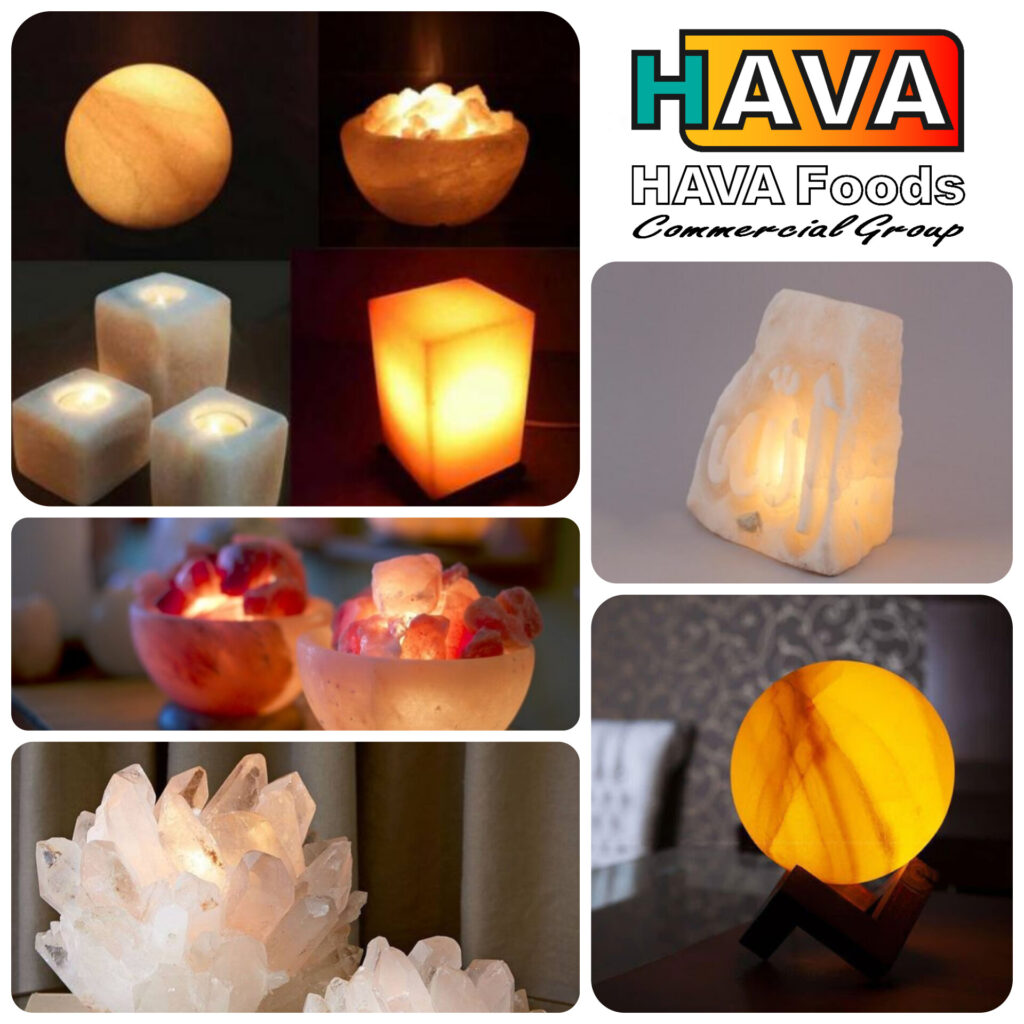
Decorative salt rocks, that also called “salt lamps”  are mined from natural salt crystals and carved and polished into various shapes and sizes for use as decorative objects in homes, offices, and other spaces.

For added beauty, you can place a small lamp inside these stones, which, when turned on will emit a soft, warm light.

Decorative Rock Salt
Features of decorative rock salts:

.Color: Decorative rock salts usually come in a variety of colors, from white to orange, pink, and red. These colors are created due to the presence of different minerals in the salt crystals.


.Shape: Decorative rock salts can be in various shapes, such as spherical, cubic, pyramidal, or in natural and irregular shapes.


.Size: Decorative rock salts come in a variety of sizes, from small to large. The size of a rock salt is usually determined by its weight.

Benefits and properties of decorative rock salts:

Proponents of decorative rock salts claim that these stones have numerous benefits and properties, including:

.Air purification: Decorative rock salts are claimed to help purify the air by absorbing moisture and ionizing it. However, there is not enough scientific evidence to support this claim.

.Reduce stress and anxiety: The soft, warm light of decorative rock salts can help create a sense of calm and reduce stress and anxiety.

.Improving sleep: Some people believe that decorative rock salts help improve sleep quality by creating a calm and pleasant atmosphere.

.Reduce allergy and asthma symptoms: It is claimed that decorative rock salts can help reduce allergy and asthma symptoms by purifying the air and reducing its humidity.

.Increase energy: Some people believe that decorative rock salts help increase productivity by increasing energy levels and improving mood.


Anyway, the decorative use of salt crystals is often attributed to their warm, low-temperature lighting, which can create a calming atmosphere, reduce psychological stress, and enhance the feeling of safety in a space. Additionally, exposure to soft, low-intensity light may help stimulate the release of melatonin—a hormone that plays a key role in regulating sleep. In psychology, this is referred to as the environmental effect of gentle lighting. However, claims such as reducing allergies, alleviating asthma, or increasing energy levels have no scientific backing.

Export of decorative rock salts:

Due to its rich rock salt resources, Iran can be one of the exporters of decorative rock salts to different countries. Iranian decorative rock salts have been noticed in global markets due to their beauty and high quality.

Count on us:

As mentioned above, Iran is one of the largest suppliers of all types of salt. Hava Food Group, with its complete knowledge and expertise on all types of salt mines, factories, and export licenses, can provide you with the best advice.

To get started, send your formal request (LOI) to our email.

We hope we can cooperate together in the long term and become good business partners.

HAVA Foods Commercial Group Logo

Leave a Reply

Your email address will not be published. Required fields are marked *

Recent Post


  • Dairy products


  • Frozen Green Peas


  • Frozen Onion


  • salt


  • Barberry


  • Raisins


  • Frozen French Fries


  • Tomato Paste


  • Canned Tuna Fish


  • Dates


  • Pistachio


  • Chicken Paw & Chicken feet


  • Saffron


  • Date Paste


  • Using Sultana and Golden Raisins in Nut Bars and food Granules — The Best Choice for Athletes


  • IQF Frozen Sweet Corn

HAVA Foods Commercial Group Logo

We Supply & Export Nuts, Dried Fruits, HoReCa & Food products from Iran to all around the world

Have Any Question?

Please don’t hesitate to ask us any questions about all kinds of food products


Email:

Info@havafoods.com


WhatsApp/Telegram:

+98 937 599 2606